
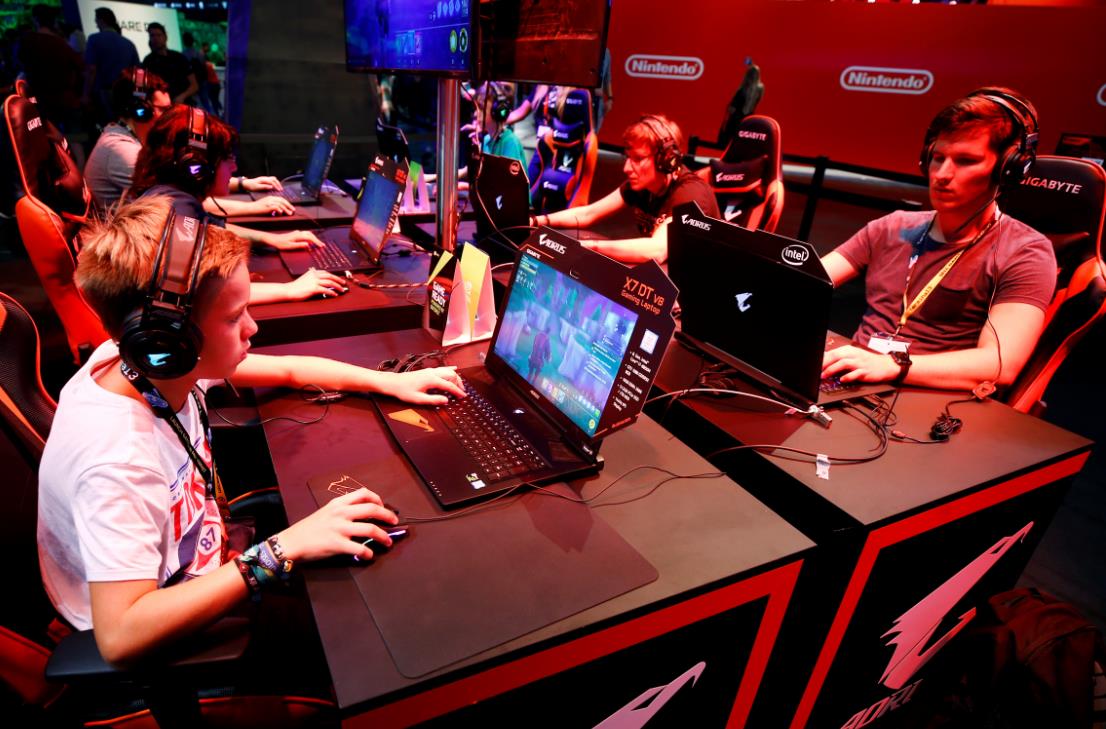
In the last two decades, online play has evolved from a niche rocking hors into a sweeping international phenomenon. With over 3 billion gamers intercontinental as of 2025, whole number play has transcended boundaries of terminology, nationality, and to become one of the most mighty unifying forces of the modern font age. No thirster restrained to consoles and PCs, online games now thrive across platforms from smartphones to VR headsets and create talkative, immersive worlds where millions interact daily. This article explores how online gaming has become a cultural in the digital era, shaping social norms, international personal identity, and even international collaboration.
The Rise of a Digital Megaculture
Online gaming began its world-wide expansion in the early 2000s with the increment of wideband internet and multiplayer titles like World of Warcraft, Counter-Strike, and Runescape. These games introduced millions to continual online worlds where interactions felt real, relationships were well-stacked across borders, and entire in-game economies mimicked those of real life. As connectivity improved and sociable media integrated with gambling platforms, the once-isolated undergo of gambling transformed into a social modus vivendi, available and worthy to a different worldwide hearing.
By the 2010s and 2020s, free-to-play models and Mobile play had unconnected in popularity. Games like Fortnite, League of Legends, PUBG, and Genshin Impact became household names, not only for their gameplay but for their perceptiveness significance. These games created divided up languages befool, memes, and strategies that transcended topical anesthetic traditions. Whether in Seoul or S o Paulo, gamers could log in, queue up up, and contend or get together with others across the Earth.
A Platform for Cross-Cultural Exchange
Online play has become one of the most moral force environments for cross-cultural fundamental interaction. Players instruct to voyage differences in communication styles, customs, and values, often developing deep friendships with populate they ve never met in someone. Massive multiplayer online role-playing games(MMORPGs), aggressive esports, and sandpile games like Minecraft and Roblox all help this intercultural merging in real time.
Gamers may pick up snippets of strange languages, adopt new discernment references, or gain a broader worldview simply through regular play. Events like the FIFA eWorld Cup or League of Legends World Championship further emphasise gaming as a world-wide looker skylark, viewership that rivals traditional recreation events. These tournaments not only showcase elite group skill but also play up the International nature of pak game communities and fandoms.
Shaping Digital Identity and Creative Expression
Beyond entertainment, online gambling offers a right weapons platform for individuality shaping and imaginative self-expression. Avatars, skins, and user-generated players to craft unusual digital selves sometimes perfect versions, sometimes teasing experiments. These integer identities can take exception real-world constraints, allowing marginalized groups to explore new facets of themselves in safe, accessory spaces.
Games also increasingly answer as original outlets. Players design mods, create game-inspired art and medicine, and even build entire synergistic worlds. Online games like Dreams or LittleBigPlanet blur the line between player and , encouraging world quislingism and conception in whole number prowess.
Challenges and Global Responsibilities
Despite its positive potency, online play also faces vital challenges. Issues like cyberbullying, toxic deportment, whole number habituation, and appreciation insensitiveness are prevalent in many online spaces. Game developers, communities, and platforms now bear the responsibility of creating more comprehensive, respectful, and safe environments. Efforts like in-game moderation, AI-driven demeanour monitoring, and community-led initiatives are essential to ensuring the continuing prescribed phylogenesis of the online play landscape painting.
Moreover, play s role in geopolitics and perceptiveness statecraft is more and more in hand. Governments recognise gaming s soft world power and influence, leading to both opportunities like -cultural learning games and tensions, as seen in content censoring or weapons platform bans.
Conclusion: A Shared Digital Future
Online gambling is far more than a pursuit it is a bread and butter, evolving discernment wedge that connects billions. In its realistic arenas, the earthly concern plays, competes, creates, and communicates. As engineering continues to advance and practical reality becomes more mainstream, the role of gambling in formation a shared out world will only grow stronger. Playing with the earthly concern, it turns out, may be one of the most consolidative human being activities of the 21st .